Marvel’s Wolverine Has No Open World—and That May Be Its Sharpest Decision Yet
“NO OPEN WORLD. NO DISTRACTIONS. JUST WOLVERINE"


Category: Gaming
Marvel’s Wolverine Has No Open World—and That May Be Its Sharpest Decision Yet
Insomniac Games is trading a massive sandbox for a brutal, globe-spanning story built around Logan’s rage, history and fight for mutant survival.
By: Eliana Ross
Edited by: Todd Deck
When Insomniac Games finally pulled back the curtain on Marvel's Wolverine during Sony's June 2026 State of Play, one thing became immediately clear:
This isn't Spider-Man with claws.
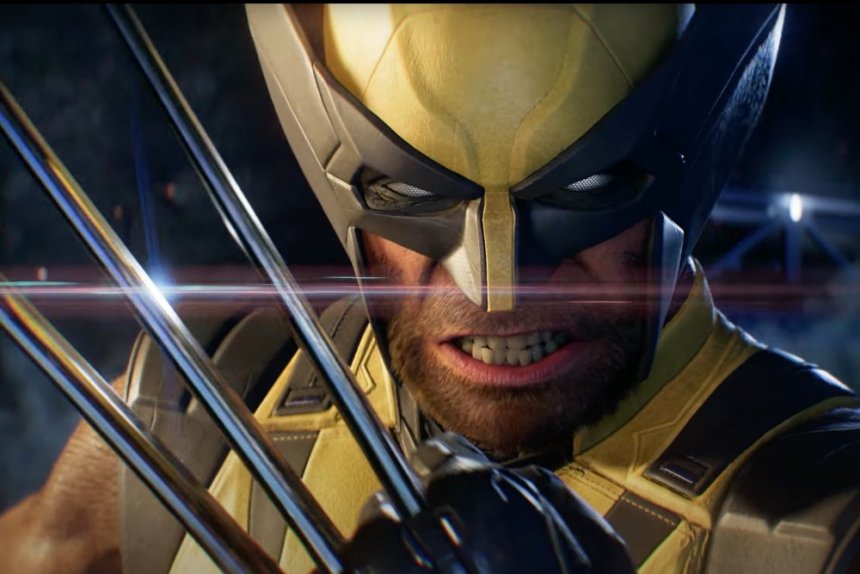
Instead, the PlayStation studio is delivering a brutally violent, mature, narrative-driven action game built specifically around Logan's character—not an endless open-world checklist.
For many gamers, that announcement was surprising.
For us?
It's one of the most exciting creative decisions Insomniac could have made.
There are game trailers that look impressive—and then there are trailers that immediately change the energy of an entire showcase.
When Marvel’s Wolverine opened Sony’s June 2026 State of Play, the extended gameplay reveal did exactly that.
The claws felt heavier. The combat looked meaner. The blood stayed on the battlefield. Logan did not move like a polished superhero performing for a crowd; he moved like a wounded animal who had finally been pushed too far.
Then came another major reveal: Marvel’s Wolverine will not be an open-world game.
Instead, players will experience a tightly paced single-player campaign that moves across several iconic Marvel locations including:
The Canadian wilderness, Tokyo, and Madripoor
Insomniac Games has officially described the title as a single-player, narrative-driven action-adventure rather than another large sandbox modeled after its Marvel’s Spider-Man series. It launches exclusively for PlayStation 5 on September 15, 2026.
At first, “no open world” may sound like a limitation.
After seeing what Insomniac is building, it may be the decision that allows this game to cut deepest.
Story and Setting: Mutants Are Being Hunted
This is not a story about Logan casually patrolling a city and waiting for crime icons to appear on a map.
Mutants are disappearing.
The cybernetically enhanced Reavers are hunting and capturing them before delivering them to billionaire industrialist Bolivar Trask, a fanatic whose belief in human superiority places mutant survival directly under threat.
Mutants are still largely hidden from wider society, leaving them isolated, feared and forced to protect themselves. Standing between Trask and his captives is Team X, a last-resort mutant task force that Logan rejoins three years after abandoning it.
That history immediately gives the story tension.
Why did Logan leave?
Why has he returned?
Can Team X trust him—and can Logan trust himself when rage has historically been both his greatest weapon and one of his deepest personal dangers?
Insomniac is positioning the game as an emotionally charged original Wolverine story, not simply a parade of familiar Marvel cameos. Logan is following a violent trail, but the real journey may force him to confront loyalty, buried trauma, personal responsibility and the consequences of walking away from people who still needed him.
A Global Wolverine Story
Rather than trapping Logan inside one enormous city, the game moves through distinct locations that better reflect his history as a wanderer.
Confirmed environments include:
- The frozen Canadian wilderness
- The narrow streets of Tokyo
- The high and low districts of Madripoor
PlayStation describes the experience as a global, adrenaline-fueled journey filled with major action set pieces and a fight for mutant survival.
This structure makes sense for Wolverine in a way that a traditional open world might not.
Spider-Man belongs to New York. The city is part of his identity, and web-swinging across it is one of the central fantasies of playing as him.
Logan is different.
He is a drifter pulled across countries by violence, unfinished business, fragments of his past and a reluctant sense of duty. Game director Mike Daly explained that the team wanted a “high-octane,” story-driven adventure because Logan is not a character permanently anchored to one location.
Canada can carry the weight of his origins.
Tokyo can open the door to his history with Japan, honor and martial discipline.
Madripoor can expose the criminal underworld where alliances are temporary and violence is currency.
A linear structure allows Insomniac to move between those places without forcing each location to become an oversized map padded with empty streets, repeated enemy bases or collectible clutter.
What Does “No Open World” Actually Mean?
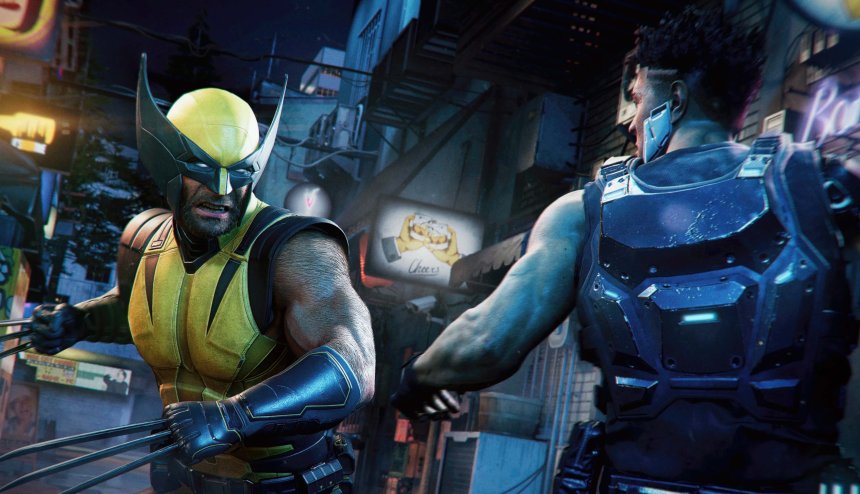
Choosing a structured design over an open world fundamentally shapes how Marvel’s Wolverine plays and tells its story.
It does not necessarily mean players will walk through narrow hallways with no freedom. Insomniac has indicated that Logan can still choose how to approach certain encounters, including whether to stalk enemies, use stealth or attack directly. Missions will also vary between combat, traversal, observation, tracking, character interaction and optional discoveries.
What changes is the overall rhythm.
The Story Can Keep Moving
Open-world games frequently interrupt their own urgency.
A character may warn that someone is moments away from death, only for the player to spend six hours collecting backpacks, clearing camps or completing races.
A structured Wolverine campaign can maintain pressure.
When Logan discovers a lead, the story can follow it immediately. When the Reavers capture mutants, the danger does not need to wait while the player clears another district.
Each Location Can Feel More Distinct
Instead of building one giant map that must support dozens of repeated activities, developers can construct focused environments around specific story moments, enemies and gameplay systems.
A snow-covered hunt through Canada should feel different from moving across Tokyo rooftops or tearing through Madripoor’s criminal districts.
Action Sequences Can Become More Ambitious
Knowing where a player is likely to be allows developers to create controlled cinematic moments that would be much harder to stage inside a fully unpredictable sandbox.
The gameplay reveal already showed Logan attacking a Reaver convoy during a highway motorcycle sequence—slashing tires, leaping between vehicles and throwing enemies from moving trucks.
Less Map Fatigue, More Forward Momentum
There may be fewer icons, fewer repeated activities and less pressure to inflate the campaign’s hour count.
That could produce a shorter experience than a giant open-world game, but length and quality are not the same thing.
A focused campaign with strong replay value, meaningful upgrades and memorable encounters may ultimately feel more complete than a 60-hour map filled with recycled objectives.
Combat Looks Brutal, Fast and Unapologetically Wolverine
Insomniac is not treating Logan’s claws like decorative superhero accessories.
They are weapons.
Logan can stalk enemies, ambush them from above or tear directly through heavily armed Reavers using fast claw strikes, parries and special combat abilities known as Techniques.
Confirmed Techniques include:
- Tornado Spin
- Bull Rush
Successful attacks, parries and kills build Logan’s Rage. That energy can strengthen his attacks, activate his Healing Factor or push him into a higher state of violence. At Rage Tier 3, the presentation shifts into a stylized monochromatic visual mode inspired by Marvel’s Black, White & Blood comics.
The contrast is striking: black-and-white imagery, aggressive motion and vivid blood cutting through the frame.
When Logan is badly injured, he can also enter Last Stand, using his Healing Factor to survive damage that would end nearly any other character.
This creates an interesting gameplay identity.
Wolverine is not simply powerful because he cannot die easily. He is dangerous because injury may push him into an even more savage state.
Jean Grey Changes the Fight
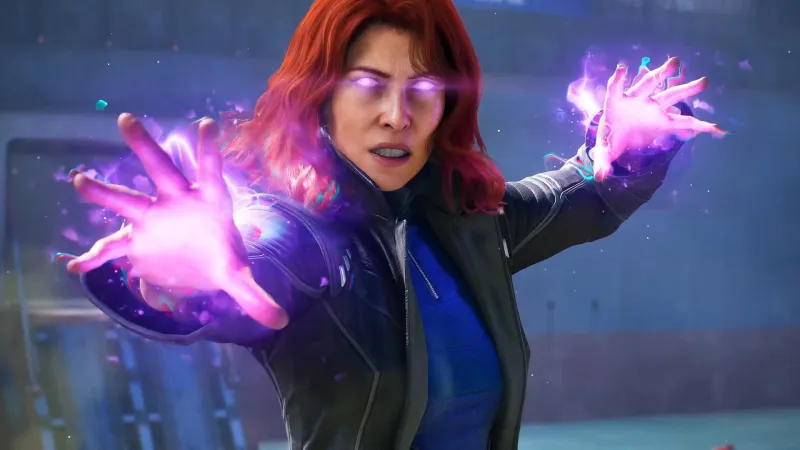
Jean Grey Isn't Just a Cameo - One of the biggest surprises is Jean Grey.
Jean Grey is not being positioned as a background cameo.
Players can trigger devastating cooperative attacks where Jean uses her telekinetic abilities to set up Wolverine's lethal finishers.
For longtime X-Men fans, this relationship could become one of the emotional anchors of the story.
The extended reveal showed her actively fighting beside Logan using telekinetic abilities to destroy enemies, control space and create opportunities for cooperative Critical Strikes.
These finishing moves can be performed by Logan alone or in combination with other characters, allowing team encounters to produce context-sensitive takedowns.
That mechanical relationship could also reflect the tension between the characters.
Jean represents control, perception and psychological power.
Logan represents instinct, physical violence and barely restrained rage.
Putting those energies together creates more than spectacle. It gives Insomniac an opportunity to explore how Jean sees Logan, how deeply she understands his mind and whether she can reach the humanity beneath the weapon.
The Mutant Lineup Is Getting Serious
Insomniac has already confirmed or teased several major characters connected to Wolverine and mutant history, including:
- Jean Grey
- Sabretooth
- Mystique
- Omega Red
- Bolivar Trask
- The Reavers
- Lady Deathstrike
The game also includes imagery connected to the larger conflict between mutantkind and anti-mutant technology, including the presence of Sentinels.
The supporting roster suggests that Insomniac is not approaching Wolverine as an isolated superhero who happens to have claws.
This is a mutant story.
It is about persecution, survival, power, identity and the dangerous systems built to control people who are considered different.
The Core Creative Team and Voice Cast
A project this ambitious depends on more than recognizable characters.
The performance at its center belongs to Liam McIntyre, known for Spartacus, who provides the voice and performance capture for James “Logan” Howlett.
McIntyre’s version of Logan is physically imposing, weathered and feral—but the role also requires more than constant anger. Wolverine works best when the audience can feel the exhaustion, grief and buried vulnerability underneath his aggression.
Reported cast credits also include:
- Krizia Bajos as Jean Grey
- Brett Gipson as Victor Creed, also known as Sabretooth
- Jolean Kim as Yuriko Oyama, also known as Lady Deathstrike
- Nicole Pacent as Raven Darkhölme, also known as Mystique
Behind the game, Mike Daly serves as game director, while Marcus Smith has been identified as creative director during the project’s current development era.
The title has also undergone leadership changes since its original announcement. When Insomniac revealed the game in September 2021, Brian Horton and Cameron Christian were initially named creative director and game director.
That distinction matters because a five-year production is rarely a straight, unchanging line.
Large games evolve. Creative leadership changes. Systems are rebuilt. Story ideas are rewritten. Performance capture, animation, combat design, accessibility work and technical optimization continue long after the first teaser appears.
Five Years in the Making
By the time Marvel’s Wolverine launches in September 2026, approximately five years will have passed since Insomniac publicly announced the project in September 2021. The original reveal described the game as being very early in development at the time.
That does not automatically mean every part of the game has been in full production for exactly five uninterrupted years. Development cycles move through concept work, pre-production, staffing, prototyping, full production and polishing at different speeds.
Still, the five-year public journey places significant expectations on the final release.
During that time, Insomniac has had to solve a difficult creative problem:
How do you make Wolverine feel completely different from Spider-Man while still delivering the technical polish expected from one of PlayStation’s leading studios?
The answer appears to be weight.
Spider-Man is speed, height, movement and improvisation.
Wolverine is impact, pressure, aggression and survival.
His fighting stance is lower. His movement is more animalistic. His attacks should feel as though the entire body is being thrown behind every strike. Even when he moves quickly, he should not feel weightless.
That distinction is essential if Insomniac wants this game to stand as its own franchise rather than being dismissed as a darker Spider-Man reskin.
Gaming Feedback: The Hype Is Real, but So Is the Debate
Reaction following the June 2026 extended gameplay reveal has been intensely positive in some areas and sharply divided in others.
What Gamers Are Praising
The Mature Direction
Many fans have wanted a high-budget Wolverine game that does not soften the character’s violence.
The reveal delivered blood, dismemberment, savage finishers and a Logan who looks more like a dangerous comic-book mutant than a polished movie hero.
The Combat Weight
The parries, lunges, environmental attacks and cooperative takedowns created a sense that every encounter could feel physical and personal.
This is not clean superhero combat.
It looks messy, desperate and painful.
The Character Design
Logan’s compact, hairy and heavily built appearance has been praised for capturing his rougher comic-book identity rather than reshaping him into a conventional leading man.
Violence Customization
PlayStation has confirmed that the accessibility options include violence customization, alongside broader visual, auditory, cognitive and motor accessibility features.
That gives players greater control over how graphic the experience becomes without requiring Insomniac to weaken the game’s default creative direction.
The Concerns Gamers Are Raising
Is It Too Cinematic?
Some players worry that the emphasis on scripted camera angles, finishers and large set pieces could make the game feel closer to an interactive film than a mechanically demanding action game.
That concern will depend on how much direct control remains between the cinematic moments.
Visually impressive animations can become repetitive when players feel as though they are triggering scenes instead of performing actions.
Will Linear Mean Restrictive?
Some players were disappointed by the confirmation that the game is not open world.
For those gamers, the fantasy of being Wolverine includes freely exploring wilderness, cities and underground locations without following a tightly controlled route.
The success of Insomniac’s decision will depend on whether individual levels feel rich and flexible rather than narrow and over-scripted.
Will It Feel Too Much Like Spider-Man?
Insomniac’s animation quality, cinematic presentation and third-person structure naturally invite comparisons to its Spider-Man games.
The gore alone will not be enough to separate them.
Wolverine needs different enemy behavior, heavier traversal, meaningful tracking systems, distinct level design and combat mechanics that reward aggression without reducing every encounter to repeated finishing animations.
Can the Story Deliver?
The cast of mutants, the involvement of Trask and the darker themes create enormous narrative potential.
They also create pressure.
Fans will be watching closely to see whether the game treats mutant persecution and Logan’s trauma with emotional depth—or simply uses those ideas as an excuse to move between violent action sequences.
No Open World Does Not Mean No Exploration
This distinction is important.
A linear game can still contain:
- Multiple routes through encounters
- Hidden areas
- Optional collectibles
- Environmental storytelling
- Upgrade resources
- Stealth opportunities
- Exploration-focused mission sections
- Semi-open combat spaces
What it does not require is a single giant map connecting every story location.
Insomniac can give players room to investigate a facility, track an enemy through a forest or choose an entry point into a Reaver base without forcing the entire game into a conventional open-world template.
The question is not whether Logan can walk anywhere.
The better question is whether every place he can go feels worth exploring.
Instead of:
❌ Hundreds of collectibles
❌ Repetitive enemy camps
❌ Endless map icons
Players receive:
✔ Better pacing
✔ More cinematic storytelling
✔ Higher-quality missions
✔ Dense combat encounters
✔ Multiple handcrafted locations
✔ Better replay value
Think of it less like an RPG sandbox—and more like an action blockbuster where every level is intentionally designed.
A focused Adventure Instead of Another Massive Map and we are excited.
Release Date, Platform and Editions
Marvel’s Wolverine launches September 15, 2026, exclusively on PlayStation 5 and PS5 Pro. It will not release on PlayStation 4.
Standard Edition — $69.99
Includes the base game.
Pre-order incentives include:
- Early unlock of the Classic Brown Suit
- Early unlock of Reflective Claws
- One additional Technique Point
- Four PlayStation avatars
Digital Deluxe Edition — $79.99
Includes:
- The full digital game
- Five exclusive suits
- Five exclusive claw designs
- Three additional Technique Points
- All standard pre-order incentives
The exclusive suits include the Incredible, Savage, Age of Apocalypse, Night Hunt and New Leather designs. The additional claw cosmetics include Smooth-Edged, Hollow Blade, Thick, Serrated Spine and Tapered variations.
So, What Should Players Expect?
Some players immediately worried after hearing the game wouldn't feature an open-world map.
Expect a focused, violent and cinematic campaign rather than a sprawling RPG.
Expect Logan to move across the world instead of protecting one city.
Expect moments of stealth, tracking and environmental observation between explosive combat sequences.
Expect Jean Grey and other mutants to play meaningful roles rather than appearing only as Easter eggs.
Expect a Rage system that connects Logan’s emotional state to both survival and combat power.
Expect a story about mutant persecution, loyalty, identity and the destructive cost of turning people into weapons.
Most importantly, expect Insomniac to prove that Wolverine does not need a giant open world to feel larger than life.
PPM Takeaway
When I saw the extended trailer, I was blown away.
Marvel's Wolverine looks like it understands exactly who Logan is.
The violence immediately catches your attention, but it is the atmosphere that stays with you. Logan looks exhausted, angry and dangerous. The world around him feels hostile. The action has weight, and the mutant storyline appears to carry consequences beyond simply defeating another villain.
The lack of an open world does not lower our excitement.
It raises our expectations.
Instead of stretching the experience across a massive map, Insomniac appears focused on delivering a tightly crafted adventure filled with brutal combat, emotional storytelling, and unforgettable set pieces. That creative choice could make every mission feel more meaningful and every encounter more intense.
Without a giant sandbox to hide behind, Insomniac must deliver through combat depth, level design, character development, pacing and story. Every environment needs a purpose. Every major encounter needs to matter. Every violent moment needs to reveal something about the man behind the claws.
Besides the new 007 James Bond game, Marvel’s Wolverine is one of the releases we are most excited to experience.
September 15 cannot come fast enough.
We call it A Mature Marvel Experience
Marvel's Wolverine carries an unmistakably darker tone than Insomniac's Spider-Man series.
Expect:
- Graphic violence
- Emotional storytelling
- Dark themes
- Animalistic combat
- Psychological conflict
- Moral ambiguity
Fortunately, players uncomfortable with graphic violence can customize gore levels through accessibility options.
Watch the Extended Gameplay Reveal
Video Credit: PlayStation, Insomniac Games and Marvel Games
Video Credit: PlayStation
Video Credit: MichaelXboxEvolved | Jean Grey Unveil
Editorial Note
This article is based on official information released by PlayStation and Insomniac Games, supported by publicly available cast credits and reporting available before launch. Characters, gameplay systems, edition contents and other features may be updated before release.
PPM Editorial Disclaimer
AI-assisted research supported the editorial process, and all content was reviewed and edited by a human editor. Creative direction by Power Pulse Magazine.
Opinions expressed in the PPM Takeaway section reflect the editorial perspective of Power Pulse Magazine.
Image & Media Credits
Images, Screenshots & Key Art: © Insomniac Games, Marvel Games, and Sony Interactive Entertainment.
Gameplay Screenshots & Promotional Assets: Courtesy of Insomniac Games and PlayStation.
Trailer & Gameplay Footage: © PlayStation / Sony Interactive Entertainment and Insomniac Games.
Marvel Characters & Logos: © Marvel.
Video Credit
Official Gameplay Reveal: PlayStation YouTube
Gameplay and trailer footage courtesy of PlayStation, Insomniac Games, Marvel Games, and Sony Interactive Entertainment.
Fair Use Notice
Power Pulse Magazine uses officially released promotional materials, screenshots, trailers, and logos solely for editorial, news reporting, commentary, review, and informational purposes. All copyrights and trademarks remain the property of their respective owners.
Share
What's Your Reaction?
 Like
1
Like
1
 Dislike
0
Dislike
0
 Love
1
Love
1
 Funny
0
Funny
0
 Angry
0
Angry
0
 Sad
0
Sad
0
 Wow
1
Wow
1