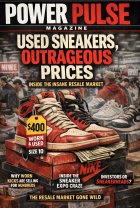
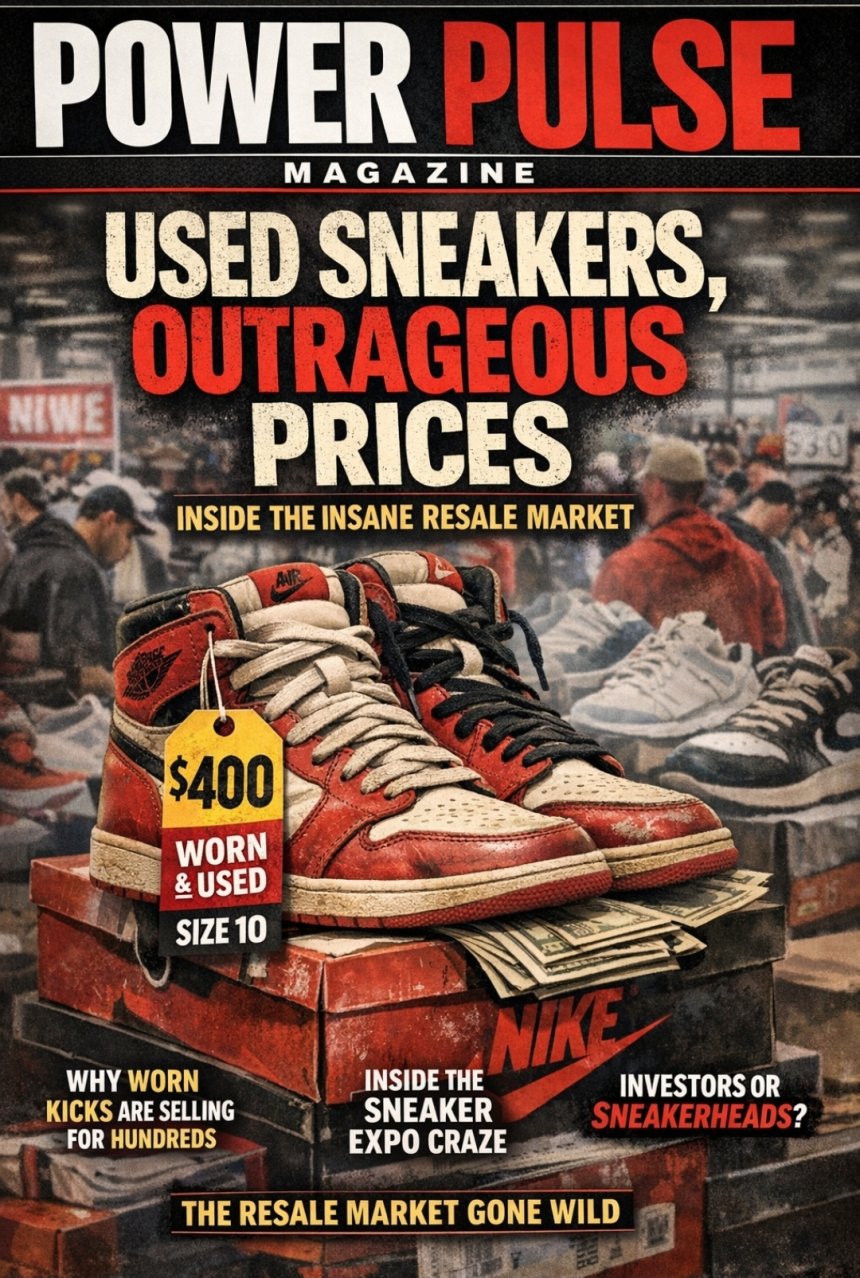
The Sneaker Resale Market Is Getting Out of Hand — Even Worn Sneakers Are Selling for Hundreds

By: Power Pulse Magazine
Editor’s Note — Sneaker culture was once built around passion: collecting, styling, basketball heritage, music influence, and community. But in today’s resale economy, many longtime sneaker enthusiasts believe the culture has shifted from appreciation to aggressive profit-chasing. At sneaker expos, resale marketplaces, and online platforms, even heavily worn sneakers are now commanding shocking prices — leaving consumers questioning whether the market has lost touch with reality.
From Sneaker Culture to Resale Economy
Over the past decade, sneaker reselling evolved from a side hustle into a billion-dollar global business. Limited-edition collaborations, celebrity partnerships, exclusive drops, and artificial scarcity transformed sneakers from footwear into speculative assets.
What began with rare Jordans and Yeezys has now expanded into an ecosystem where nearly every hyped release is immediately evaluated for “resell value” before people even wear the shoe.
For many consumers, that shift changed sneaker culture entirely.
Instead of buying shoes because they genuinely love them, some buyers now purchase pairs purely to flip for profit. The result is a resale environment where prices are often disconnected from actual product value, especially at sneaker conventions and local resale events.
Why Worn Sneakers Are Still Selling for Massive Prices
One of the most controversial developments in the current market is the rise of expensive used sneakers.
At sneaker expos across the United States, previously worn pairs are frequently listed at prices far above what many consumers believe they are worth. In some cases, used sneakers are being priced close to — or even above — the original resale value of deadstock (brand-new) pairs from previous years.
Several factors are driving this trend:
1. Artificial Scarcity
Major brands intentionally release limited quantities of highly anticipated sneakers. Once a shoe sells out, availability shrinks instantly, creating pressure in the secondary market.
Even worn pairs become valuable simply because replacement inventory barely exists.
2. Fear of Missing Out (FOMO)
Sneaker culture heavily relies on exclusivity and social status. Buyers often fear they may never see a specific pair again in their size, which encourages emotional purchases rather than rational spending decisions.
3. “Grail” Culture
Some sneakers carry legendary status within sneaker communities. Original Air Jordans, Travis Scott collaborations, Off-White releases, Kobe retros, and vintage Nike SBs are often treated more like collectibles than wearable products.
Condition becomes secondary to rarity.
4. Social Media Influence
Platforms like TikTok, Instagram, and YouTube have intensified sneaker hype culture. Viral “sneaker expo” content frequently glamorizes massive collections, expensive pickups, and high-dollar transactions.
This creates an illusion that inflated resale prices are normal.
Sneaker Expos Are Becoming High-Pressure Marketplaces
Sneaker conventions were originally community-driven events where collectors could meet, trade, and celebrate sneaker culture together.
Today, many attendees describe a completely different atmosphere.
At large expos, rows of vendor tables are now filled with aggressively priced inventory, with some sellers attempting to maximize profit margins on nearly every pair — including visibly worn sneakers.
Consumers often encounter:
- $400–$800 used sneakers with noticeable wear
- Sellers refusing negotiation despite market declines
- Fake scarcity tactics
- High-pressure sales tactics
- Trend-driven pricing disconnected from real demand
Many longtime sneaker enthusiasts argue that expos increasingly feel more like speculative trading floors than cultural gatherings.
The Market Is Cooling — But Prices Haven’t Fully Adjusted
Ironically, the sneaker resale market is no longer as explosive as it was during the pandemic-era boom.
During 2020–2022:
- Stimulus spending increased discretionary purchases
- Sneaker demand surged online
- Resellers made record profits
- Limited pairs instantly skyrocketed in value
But by 2025–2026, several market shifts became clear:
- Consumer Spending Has Tightened
Inflation and rising living costs have reduced impulse luxury spending for many buyers.
- Oversaturation Has Hurt Resellers
Too many people entered sneaker reselling hoping for quick profits. As a result, many general-release sneakers no longer generate strong resale margins.
- Brands Increased Production
Nike, Jordan Brand, Adidas, and New Balance have expanded stock numbers on many releases, reducing exclusivity.
- Buyers Are Becoming More Selective
Consumers are increasingly questioning whether resale prices actually justify the condition or rarity of certain pairs.
Still, despite these corrections, many resale sellers continue pricing used sneakers as though the market never cooled.
The Psychology Behind Paying Hundreds for Used Sneakers
The sneaker resale world operates heavily on emotional psychology.
Buyers are not simply purchasing rubber and leather — they are buying:
- Nostalgia
- Social identity
- Status
- Cultural relevance
- Internet validation
- Exclusivity
That emotional connection allows resale prices to remain inflated even when condition declines.
A worn sneaker tied to a meaningful collaboration or iconic era can still feel “valuable” to collectors because the purchase represents access to a cultural moment.
For some consumers, owning the shoe matters more than its physical condition.
Counterfeit Concerns Are Making Things Worse
As resale prices continue climbing, counterfeit production has become more sophisticated.
Fake sneakers now regularly appear:
- At local sneaker events
- On resale apps
- Through peer-to-peer marketplaces
- On social media marketplaces
Some replicas are now so convincing that inexperienced buyers struggle to tell the difference without authentication services.
This has increased distrust throughout the resale community and made many buyers hesitant to spend large amounts on used pairs.
Is Sneaker Culture Losing Its Original Identity?
Many longtime sneaker enthusiasts believe modern sneaker culture has become too financially driven.
Instead of:
- collecting,
- styling,
- wearing,
- and appreciating sneakers,
the conversation increasingly revolves around:
- market value,
- resale projections,
- stock numbers,
- and investment potential.
For critics, the culture now prioritizes flipping over genuine appreciation.
That tension has created a divide between:
- collectors who love sneakers,
- and resellers treating sneakers like stock portfolios.
The Future of Sneaker Resale
Despite growing criticism, the resale market is unlikely to disappear.
Sneakers remain deeply tied to:
- fashion,
- sports,
- music,
- streetwear,
- celebrity influence,
- and youth culture.
However, the market may continue shifting toward:
- smarter buyers,
- lower profit margins,
- stricter authentication,
- and more realistic resale pricing.
Consumers are becoming more informed, and many are beginning to reject inflated prices for heavily worn products.
Whether sneaker culture fully rebalances itself remains to be seen.
But one thing is becoming increasingly clear:
Paying hundreds — sometimes thousands — for visibly used sneakers is no longer shocking in today’s resale economy.
For many sneaker fans, that reality says everything about how far the culture has changed.
Power Pulse Magazine
Culture • Fashion • Streetwear • Consumer Trends
Share
What's Your Reaction?
 Like
1
Like
1
 Dislike
0
Dislike
0
 Love
1
Love
1
 Funny
0
Funny
0
 Angry
0
Angry
0
 Sad
0
Sad
0
 Wow
1
Wow
1