The Mid Year Financial Reset: Take control of your money before the second half of 2026
The Mid-Year Money Checkup • Money with intention How small Financial decisions build Long-term wealth | The smart money audit what to keep, cut, and change before the year end. July 2026
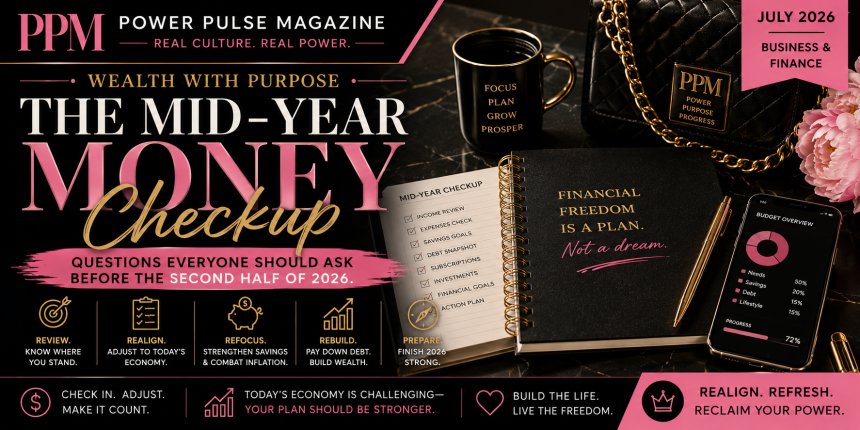
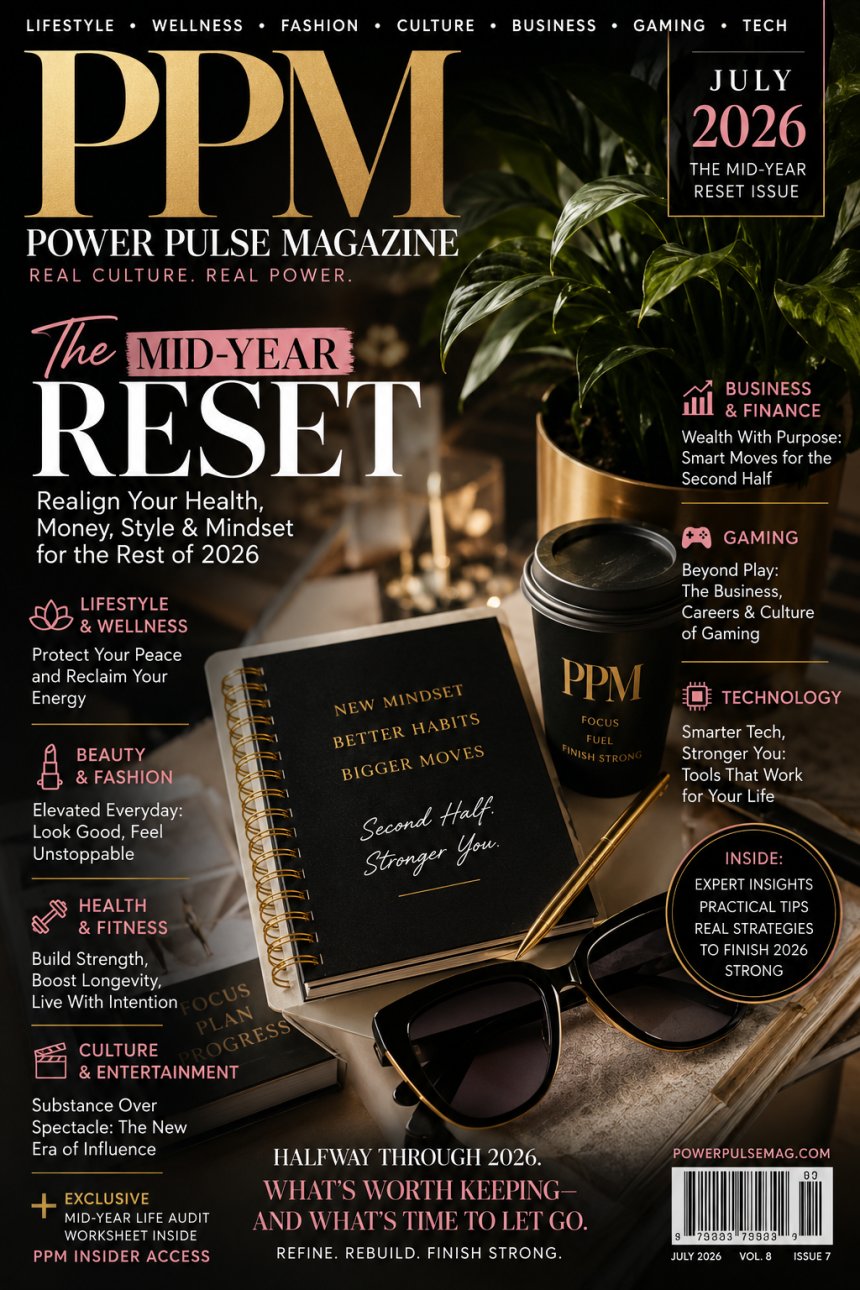
The Mid-Year Money Checkup
Questions Everyone Should Ask Before the Second Half of 2026
Wealth With Purpose
By: Maya Brooks — Lifestyle & Wellness Writer
Power Pulse Magazine | July 2026
Category: Business & Finance
Editor's Note
The middle of the year is the perfect time for a financial reset.
Not because you've failed your goals—but because life changes.
Prices rise. Priorities shift. Unexpected expenses happen. Income changes. Opportunities appear.
The smartest financial move isn't pretending nothing has changed.
It's adjusting your plan.
A mid-year money checkup gives you the chance to pause, evaluate your financial habits, and prepare for the months ahead with greater confidence instead of uncertainty.
Question 1: Where Is My Money Actually Going?
Many people know what they earn.
Far fewer know exactly where it goes.
Inflation has quietly increased the cost of groceries, utilities, insurance, transportation, and everyday necessities. Small price increases across multiple categories can significantly affect your monthly budget.
Spend 20 minutes reviewing the past two or three months of bank and credit card statements.
Look for patterns rather than perfection.
Ask yourself:
1. What expenses surprised me?
2. Which purchases improved my life?
3. Which ones added little long-term value?
Awareness is the foundation of better financial decisions.
Question 2: Has Inflation Changed My Budget?
A budget that worked last year may not work today.
Higher prices don't necessarily mean you're spending irresponsibly—they may simply reflect today's economy.
Instead of forcing outdated numbers to work, update your budget to reflect current costs.
Review categories such as:
- Housing
- Utilities
- Groceries
- Transportation
- Insurance
- Healthcare
- Childcare
- Savings
A realistic budget is far more effective than a perfect one.
Question 3: Am I Paying for Things I No Longer Use?
Subscription services have become part of everyday life.
Streaming platforms, cloud storage, fitness apps, gaming memberships, software, and premium subscriptions can quietly add up.
Review every recurring payment and ask:
1. Did I use this in the last month?
2. Does it still provide value?
3. Could I pause it temporarily?
Reducing unnecessary recurring expenses can free up money without making major lifestyle changes.
Question 4: Could I Handle an Unexpected Expense?
Emergencies rarely arrive on schedule.
Even a modest financial cushion can make unexpected situations less stressful.
If building a large emergency fund feels overwhelming, start with a smaller milestone.
The goal isn't perfection.
The goal is progress.
Question 5: Is My Debt Working Against My Goals?
Not all debt has the same impact, but high-interest balances can become increasingly expensive over time.
Review:
- Credit card balances
- Personal loans
- Auto loans
- Buy Now, Pay Later purchases
Ask yourself:
"What balance would create the biggest relief if I reduced it first?"
One focused strategy is often more effective than trying to tackle everything at once.
Question 6: Am I Saving for the Future—or Just Reacting to Today?
When living costs increase, it's easy to focus only on immediate needs.
However, even small, consistent contributions toward future goals can build momentum.
Whether you're saving for:
- An emergency fund
- A vacation
- Education
- Retirement
- Starting a business
Consistency often matters more than the amount.
Question 7: Does My Spending Reflect My Priorities?
Money is one of the clearest reflections of personal priorities.
That doesn't mean every purchase needs to be perfect.
It simply means asking:
1. Does my spending support the life I'm trying to build?
2. Am I investing in experiences and goals that matter?
3. Am I spending intentionally or impulsively?
Financial wellness isn't about spending less.
It's about spending with purpose.
Mid-Year Financial Habits Worth Building
As you prepare for the second half of 2026, consider adding these habits to your routine:
✔ Schedule one monthly money check-in.
✔ Review subscriptions every quarter.
✔ Automate savings when possible.
✔ Build a small emergency buffer before taking on new financial commitments.
✔ Compare prices on recurring bills such as insurance or phone plans.
✔ Celebrate progress, even if it's gradual.
Small improvements often lead to meaningful long-term results.
The PPM Mid-Year Money Checklist
☐ I know where my money goes each month.
☐ My budget reflects today's prices.
☐ I've reviewed my recurring subscriptions.
☐ I'm working toward an emergency fund.
☐ I understand my debt repayment plan.
☐ My financial goals are realistic.
☐ My spending aligns with my priorities.
☐ I have a plan for the rest of 2026.
PPM Final Word
Financial confidence isn't built by predicting the future.
It's built by preparing for it.
The second half of 2026 doesn't require a perfect budget or a perfect income.
It requires awareness, flexibility, and a willingness to make thoughtful adjustments as life changes.
Small financial decisions made consistently can create meaningful progress over time.
The goal isn't simply to earn more.
It's to build a financial life that supports your values, reduces unnecessary stress, and gives you greater freedom to focus on what matters most.
Because true wealth isn't measured only by what you own.
It's measured by the choices your money allows you to make.

PPM Editorial Note
This article is intended for educational and informational purposes only and should not be considered financial, legal, or tax advice. Every financial situation is different. AI-assisted research supported the editorial process, and all content was reviewed and edited by a human editor. Creative direction by Power Pulse Magazine.
Share
What's Your Reaction?
 Like
1
Like
1
 Dislike
0
Dislike
0
 Love
1
Love
1
 Funny
0
Funny
0
 Angry
0
Angry
0
 Sad
0
Sad
0
 Wow
1
Wow
1