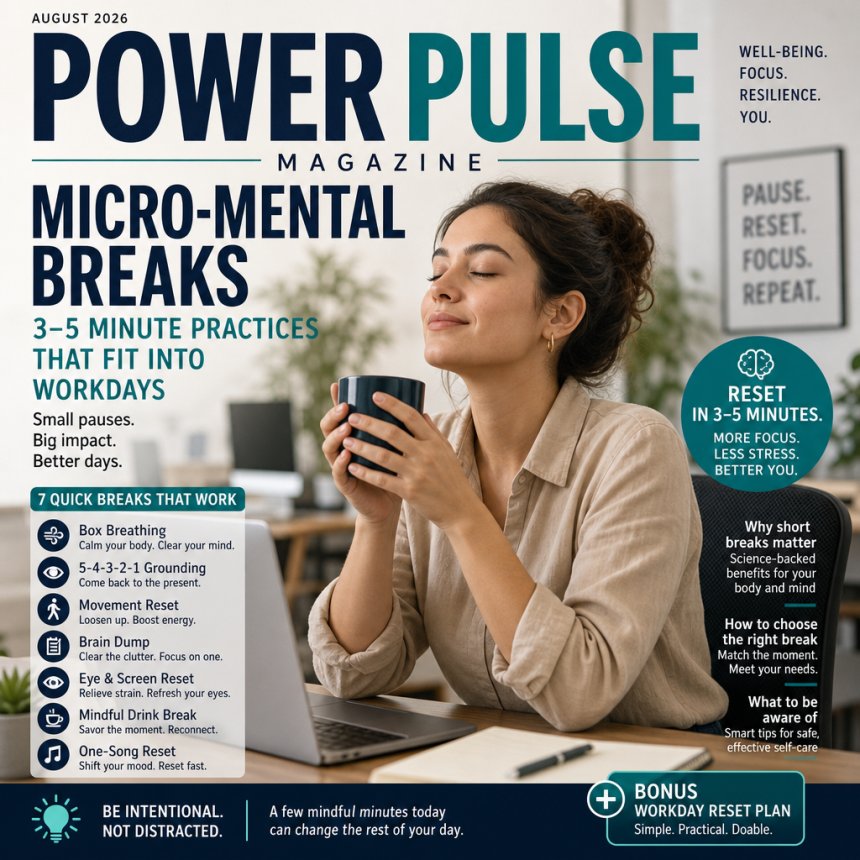
Micro-Mental Breaks: 3–5 Minute Practices That Fit Into Workdays
Power Pulse Magazine (PPM) is a modern lifestyle and wellness publication delivering smart, engaging, and trustworthy content on health, nutrition, fitness, motivation, and everyday living. With an editorial voice that is clear, empowering, and reader-focused, PPM helps audiences make informed choices and live stronger, healthier lives.
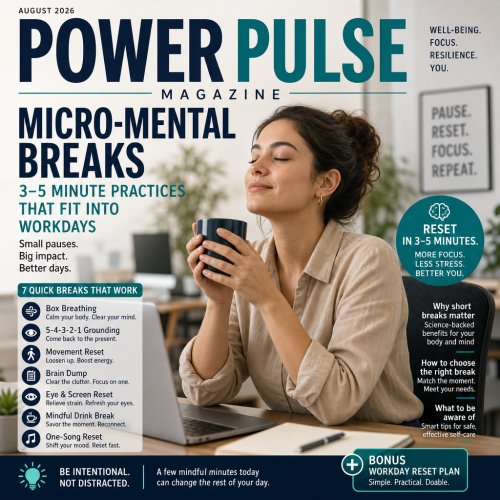
Micro-Mental Breaks: 3–5 Minute Practices That Fit Into Workdays
By: Eliana Ross — Writer, Power Pulse Magazine
(Originally Published- Updated)
When work gets busy, it is tempting to push through the whole day without stopping. But attention is not built to stay sharp forever. The brain gets tired, muscles tighten, and stress builds quietly in the background.
That is where micro-mental breaks come in.
These are short, intentional pauses — usually 3 to 5 minutes — that help you reset without derailing your schedule. They are not a luxury, and they are not a sign of low productivity. In fact, research on brief workplace breaks suggests they can help reduce fatigue, support mood, and improve sustained focus, especially when the break includes movement or a true mental reset.
The key is to make the break intentional. Scrolling your phone for three minutes is not the same as giving your mind a real pause.
Why micro-mental breaks matter
Short breaks can help in a few important ways:
1. Reduce mental fatigue
2. Lower muscle tension from sitting or screen use
3. Support focus between tasks
4. Help the nervous system downshift from stress
5. Improve work endurance across the day
What people may not know:
A break does not need to be long to be useful. Even a few minutes away from a task can help, especially if you stop doing work-related thinking for a moment.
The best 3–5 minute micro-breaks
1. Box breathing: 1–3 minutes
Try this if you feel tense, rushed, or overstimulated.
How to do it:
- Inhale for 4 counts
- Hold for 4 counts
- Exhale for 4 counts
- Hold for 4 counts
- Repeat for 4 to 6 rounds
This simple breathing pattern can help slow the pace of your breathing and create a calmer internal state.
What to be aware of:
If breath-holding feels uncomfortable, skip it and use a gentler pattern like inhale for 4, exhale for 6.
2. 5-4-3-2-1 grounding: 3–5 minutes
Try this when your mind is racing or you feel mentally overloaded.
Notice:
- 5 things you can see
- 4 things you can feel
- 3 things you can hear
- 2 things you can smell
- 1 thing you can taste
This technique shifts attention away from stress and back to the present moment.
What people may not know:
Grounding works best when you really name the sensations instead of rushing through the list.
3. A movement reset: 3–5 minutes
Try this if you have been sitting too long or feel physically stiff.
Options:
- Walk to get water
- Do gentle shoulder rolls
- Stretch your wrists and forearms
- Stand and march in place
- Take a quick lap around the office or home
Movement breaks matter because sitting for long periods can increase discomfort and stiffness. Even short movement can help break up that pattern.
What to be aware of:
Keep movement gentle. If a stretch causes pain, stop. A micro-break is meant to refresh you, not strain you.
4. The brain dump: 3 minutes
Try this when your mind feels cluttered with too many tasks.
How to do it:
- Grab paper or a notes app
- Write down every task, worry, or reminder on your mind
- Do not organize it yet
- End by circling the top one task you want to handle next
This helps clear mental tab overload and can reduce the feeling that you are holding everything in your head.
What people may not know:
A brain dump is not about becoming perfectly organized. It is about reducing cognitive noise.
5. Eye and screen reset: 3–5 minutes
Try this if you have been staring at a screen for a while.
Do this:
- Look away from your screen
- Focus on something far in the distance
- Blink slowly several times
- Close your eyes for 20–30 seconds
- Relax your jaw and shoulders
Many eye-care professionals also recommend the 20-20-20 rule during screen-heavy work: every 20 minutes, look at something 20 feet away for 20 seconds.
What to be aware of:
If your eyes feel dry or strained often, screen breaks help — but persistent symptoms may need professional attention.
6. A mindful drink break: 3–5 minutes
Try this when you feel scattered or low-energy.
Use water, tea, or another non-alcoholic drink:
- Hold the cup or bottle
- Notice the temperature
- Take small, slow sips
- Pay attention to taste and smell
- Avoid multitasking while you drink
This kind of break creates a small moment of calm and helps you reconnect with your body.
What people may not know:
A drink break can be a real reset if you do it without checking email or social media at the same time.
7. One-song reset: about 3–4 minutes
Try this when you need a mood shift.
Choose one song that feels grounding or energizing and do nothing else while it plays:
- stand and stretch
- close your eyes briefly
- breathe slowly
- listen fully
Music can change your state quickly, especially if you use it intentionally.
What to be aware of:
Not every song is restorative. Pick music that calms you or helps you refocus, not something that increases stress.
How to choose the right break for the moment
Different kinds of stress need different kinds of relief:
- Mental overload: brain dump or grounding
- Physical tension: movement reset
- Anxiety or rush: breathing practice
- Screen fatigue: eye reset
- Low energy: mindful drink break or short walk
- Emotional overload: grounding or music reset
A good rule is:
If your body feels tense, move. If your mind feels noisy, ground. If your focus is fading, step away.
What people may not know
Here are a few useful facts:
- A micro-break is not the same as a distraction. A real break is intentional, not just another screen.
- The quality of the break matters. A short pause that truly detaches from work can be more helpful than a longer one spent still thinking about deadlines.
- Short breaks work best before burnout hits. Waiting until you are completely drained makes recovery harder.
- Not every break has to be relaxing. Some people feel restored by movement more than stillness.
- Work habits matter too. Micro-breaks help, but they do not replace sleep, reasonable workloads, or time off.
What to be aware of
Micro-mental breaks are useful, but they are not magic. Keep these points in mind:
1. Don’t turn the break into more work
Checking email, messages, or news often keeps your brain in the same stress loop.
2. Avoid doomscrolling
A “break” filled with upsetting content can leave you more drained than before.
3. Be careful with breathing practices if they make you uncomfortable
Some people feel dizzy or anxious with certain breathing exercises. If that happens, use a gentler version or choose a different break.
4. Don’t force stretches
If you have neck, back, wrist, or joint issues, use comfortable movement only.
5. Micro-breaks are not a fix for chronic burnout
If you are exhausted all the time, struggling to sleep, losing motivation, or feeling persistently overwhelmed, it may be time to look at workload, boundaries, and professional support.
6. If you have a health condition, personalize your approach
People with panic disorder, migraine, musculoskeletal injuries, or other medical concerns may need modified strategies.
A simple workday reset plan
If you want to make this easy, try this:
- Morning: one breathing reset
- Mid-morning: one movement break
- Afternoon: one brain dump or eye reset
- Late day: one mindful drink break or grounding exercise
Even two or three short pauses can make a long workday feel more manageable.
The bottom line
Micro-mental breaks are small, but they can make a real difference. Three to five minutes is enough time to breathe, move, ground yourself, and interrupt stress before it builds too high.
The best break is the one that matches what you need in that moment — not the one that looks most productive on paper.
If you use them consistently, these short pauses can help you feel steadier, sharper, and less run down by the end of the day.
PPM Disclaimer
This article is for general informational and educational purposes only and is not intended as medical advice, diagnosis, or treatment. Mental health and wellness strategies vary from person to person. If you are experiencing ongoing stress, anxiety, depression, panic, burnout, or other health concerns, please consult a qualified healthcare professional or mental health provider for personalized guidance.
Share
What's Your Reaction?
 Like
0
Like
0
 Dislike
0
Dislike
0
 Love
0
Love
0
 Funny
0
Funny
0
 Angry
0
Angry
0
 Sad
0
Sad
0
 Wow
0
Wow
0