
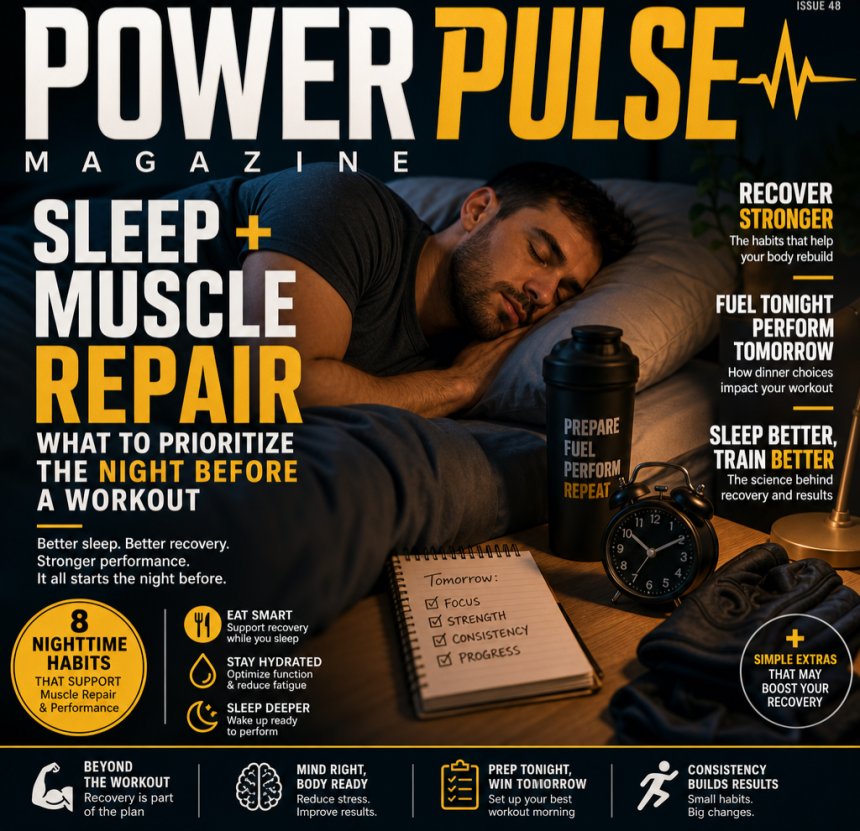
Sleep + Muscle Repair: What to Prioritize the Night Before a Workout
Fitness Tips & Fitness Recovery with PPM


Category: Health & Wellness / Fitness Recovery
By: Maya Brooks & Eliana Ross - PPM Staff
Edited by: Todd Deck
Sleep + Muscle Repair: What to Prioritize the Night Before a Workout
The night before a workout is not when you “build” all of your muscle, but it is a critical window for recovery, energy, and performance. Good sleep and smart evening habits help your body repair tissue, restore energy stores, regulate hormones, and prepare your nervous system for training.
If you wake up under-slept, dehydrated, or under-fueled, your workout can feel harder than it should. You may notice lower endurance, slower reaction time, more fatigue, and less motivation. The good news is that a strong pre-workout evening routine does not need to be complicated.
What you do the night before matters more than many people realize.
Why sleep matters for muscle repair
Sleep is one of the body’s most important recovery tools. During sleep, your body supports processes involved in:
- muscle protein synthesis
- tissue repair
- hormone regulation
- glycogen restoration
- nervous system recovery
- inflammation control
This does not mean sleep works like a magic switch that instantly fixes soreness. Recovery is a process that continues over time. But if sleep quality is poor, your body has a harder time doing the work it needs to do.
For people who train regularly, sleep is not optional recovery—it is part of the training plan.
What to prioritize the night before a workout
1. Get enough sleep
The most important priority is simple: sleep enough.
Most adults do best with about 7 to 9 hours of sleep per night, though individual needs vary. If you are training hard, recovering from a previous workout, or feeling run down, you may need the full amount.
A single short night will not ruin your fitness progress, but repeated sleep loss can make workouts feel tougher and recovery slower.
Helpful tip:
Try to keep your bedtime and wake time consistent, even on days off. A stable sleep schedule supports better recovery than “catch-up” sleep alone.
2. Eat a balanced dinner
Your body needs fuel to recover and perform well the next day. A balanced dinner the night before a workout should ideally include:
- protein to support muscle repair
- carbohydrates to replenish glycogen and support training energy
- healthy fats in moderate amounts for satiety and overall nutrition
Examples of solid dinner combinations:
- salmon, rice, and vegetables
- chicken, sweet potato, and broccoli
- tofu stir-fry with noodles and vegetables
- lentils, quinoa, and roasted vegetables
- Greek yogurt on the side of a grain-based meal if extra protein is needed
People often miss this:
Carbs are useful, not something to fear. If your workout is intense, long, or involves strength training plus cardio, carbs the night before can help you feel more energized the next morning.
3. Don’t go to bed under-fueled
Skipping dinner or eating too little can affect your energy and sleep quality. Some people also wake up hungry, which can make a morning workout feel sluggish or uncomfortable.
If your workout is early the next day, a light evening snack may help if dinner was too early or too small.
Good pre-bed snack ideas:
- Greek yogurt with fruit
- oatmeal with nut butter
- whole grain toast with peanut butter
- cottage cheese with berries
- banana with a small handful of nuts
4. Hydrate, but don’t overdo it
Hydration matters for muscle function, circulation, temperature control, and recovery. Being even mildly dehydrated can make exercise feel harder.
Try to drink water consistently through the evening instead of chugging a lot right before bed.
If you sweat heavily, train in heat, or did a hard session the day before, electrolytes may also help restore fluid balance.
Helpful tip people may not know:
You do not need to force huge amounts of water at night. That can interrupt sleep with extra bathroom trips, which hurts recovery more than it helps.
5. Avoid alcohol if recovery matters
Alcohol can interfere with sleep quality, even if it makes you feel sleepy at first. It may reduce sleep depth, increase nighttime awakenings, and leave you feeling less refreshed in the morning.
If your goal is muscle recovery and a strong workout tomorrow, minimizing alcohol the night before is one of the smartest choices you can make.
6. Cut off caffeine early enough
Caffeine can stay in your system for hours. If you have coffee, energy drinks, or pre-workout too late in the day, it can make it harder to fall asleep and reduce sleep quality.
That matters because sleep quality affects how recovered you feel in the morning.
Rule of thumb:
If you are sensitive to caffeine, avoid it later in the afternoon or evening. Even if you fall asleep, your sleep may still be lighter or less restorative.
7. Keep the evening low-stress
Stress can make it harder to relax and fall asleep. If you go to bed mentally overstimulated, your body may stay in a more alert state longer than you want.
Try a simple wind-down routine:
- dim lights
- put your phone away earlier
- stretch lightly
- shower or wash your face
- read a few pages
- use calm breathing
- write down tomorrow’s workout or morning plan
This helps signal to your body that it is time to recover.
8. Set up your workout before bed
Reducing morning decisions can improve consistency and lower stress.
Before bed, you can:
- lay out workout clothes
- Fill your water bottle
- prep your breakfast or post-workout snack
- pack your gym bag
- set an alarm with enough time to wake up calmly
This is a small habit, but it helps you start the day with less friction.
What people often get wrong
Mistake 1: Thinking recovery starts only after the workout
Recovery is not just post-workout. It is an ongoing process. Sleep the night before helps your body show up ready to train.
Mistake 2: Eating too lightly before a training day
If you under-eat at dinner, you may wake up with lower energy and a weaker workout.
Mistake 3: Training hard and sleeping poorly
This is a common combination, but it is one of the fastest ways to feel run down.
Mistake 4: Using supplements instead of basics
Supplements are secondary. Sleep, food, hydration, and consistency matter more.
A few smart extras you may not know
Magnesium is not a cure, but it may help some people
Some people find magnesium helpful for relaxation or sleep, especially if they are low in it. But it is not necessary for everyone, and it is not a replacement for good sleep habits.
Tart cherry may support recovery for some athletes
Tart cherry products have been studied for sleep and recovery support in some cases, particularly around exercise soreness. The effect is modest, not dramatic, and it should be treated as a possible add-on, not a main strategy.
Room temperature matters
A cooler bedroom often supports better sleep. If you sleep hot, recovery can suffer because sleep becomes more disrupted.
One bad night is not a disaster
If you do not sleep perfectly, your workout is not automatically ruined. You may just need to adjust intensity, extend your warm-up, or focus on form instead of pushing for a personal best.
Sample night-before routine for a morning workout
Here is a simple example:
6:30 p.m. — Eat dinner with protein, carbs, and vegetables
7:30 p.m. — Drink water and start winding down
8:00 p.m. — Light walk or gentle stretching
8:30 p.m. — Prep clothes, shoes, water bottle, and breakfast
9:00 p.m. — Dim lights, reduce phone use
9:30 p.m. — Relax with reading or breathing exercises
10:00 p.m. — Sleep
You can shift the timing to fit your schedule. The key is consistency.
The bottom line
If you want better workouts, the night before matters. Prioritize sleep, eat enough, hydrate well, avoid alcohol and late caffeine, and keep your evening calm. These basics support muscle repair and help your body feel ready to perform.
The best recovery strategy is not complicated—it is repeatable.
PPM Takeaway
The night before a workout, focus on sleep, a balanced dinner, hydration, and a calm wind-down routine. These simple habits support muscle repair, better energy, and stronger training performance.
PPM Disclaimer
This article is for general informational and educational purposes only and is not intended to replace medical, nutritional, or fitness advice. Individual recovery needs vary based on training intensity, health status, age, and lifestyle. If you have ongoing sleep problems, fatigue, pain, or concerns about exercise recovery, please consult a qualified healthcare professional.
Share
What's Your Reaction?
 Like
1
Like
1
 Dislike
0
Dislike
0
 Love
0
Love
0
 Funny
0
Funny
0
 Angry
0
Angry
0
 Sad
0
Sad
0
 Wow
0
Wow
0